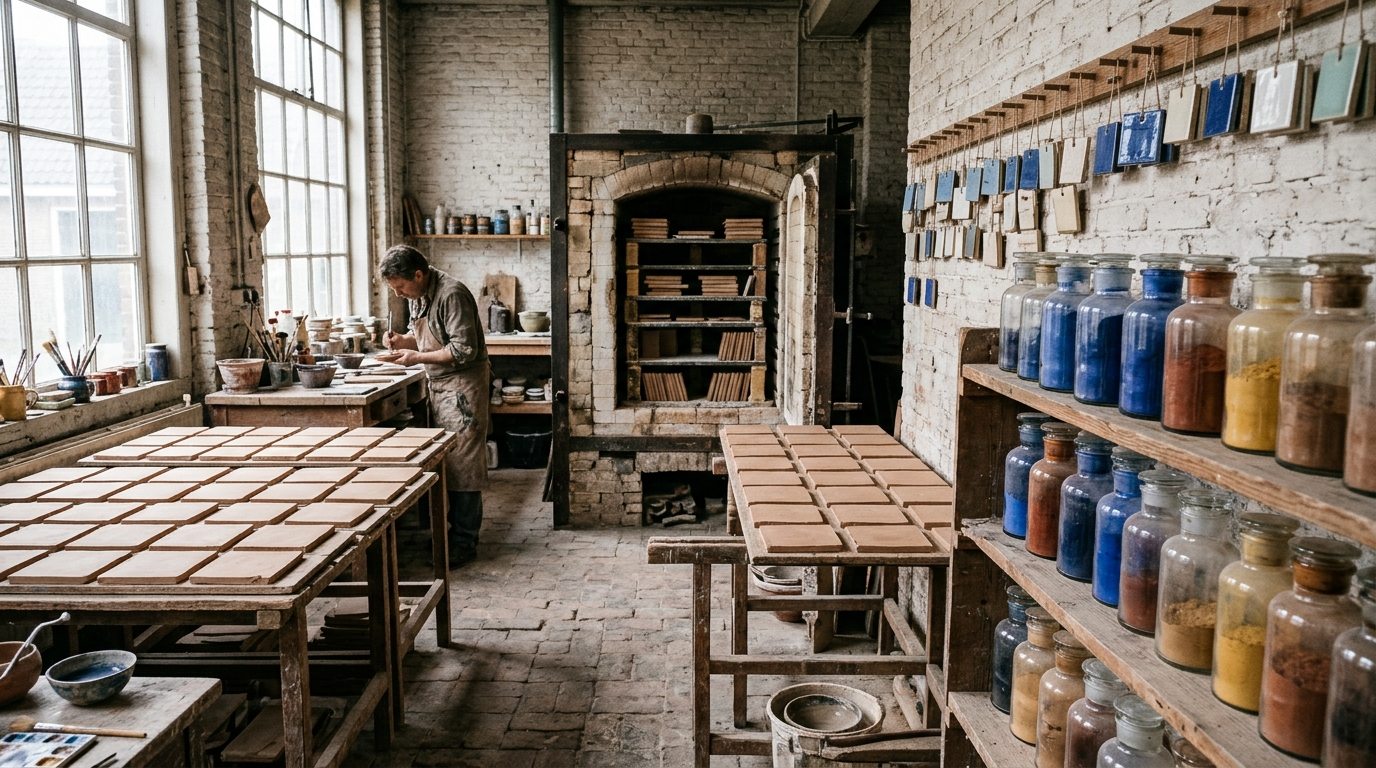
STAGE 01 · CLAY
Maas / Rijn Marl Blending
We blend iron-poor cream marl clay for wall Witjes and dense iron-rich stoneware for DIN R11 hearth and vestibule Estriken.
Founded in 2014 on the Schie industrial canal, Delft Glaze Studio pairs 17th-century tin-glazing gestures with repeatable architectural batch discipline.
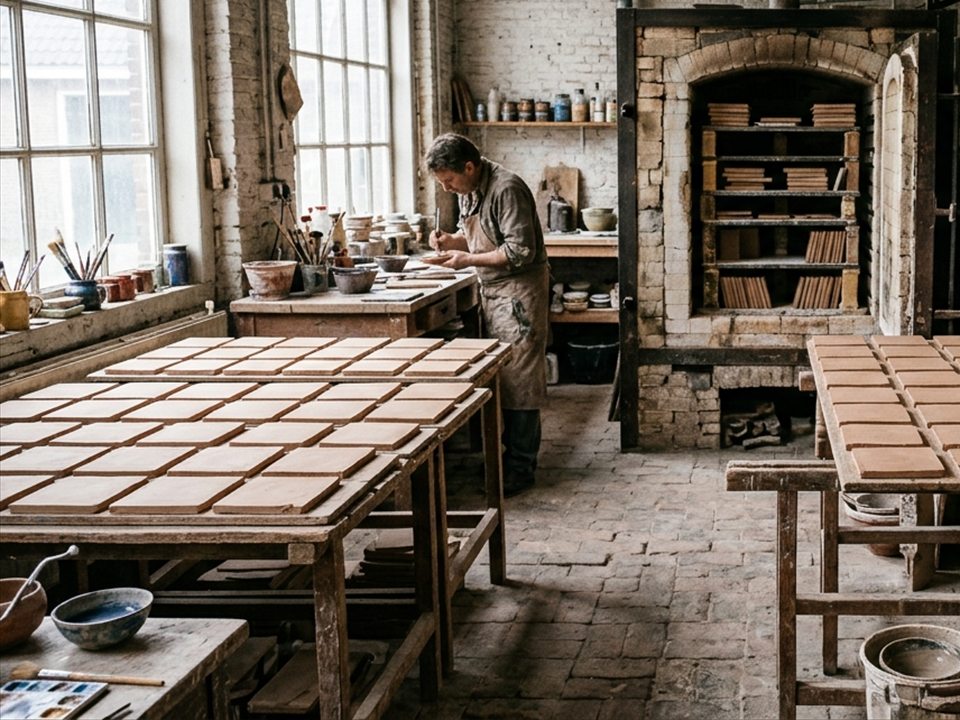
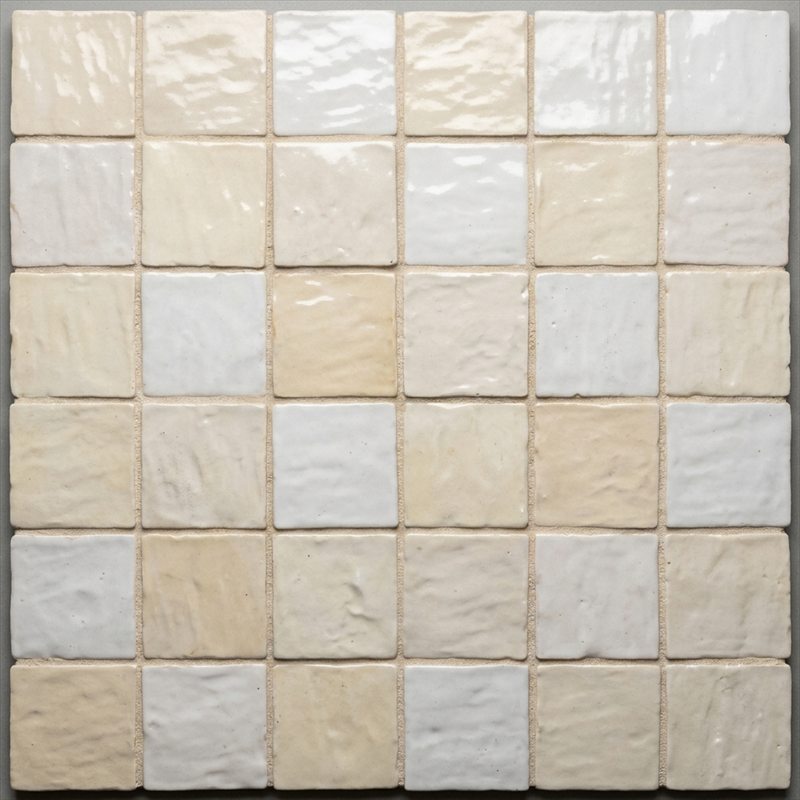
An industrial tunnel-kiln tile is dead flat; daylight hits every square equally. When wet marl clay is pressed by hand onto seasoned beechwood boards and cut around corner pins, the clay relaxes slightly as it dries.
Once covered in glossy tin oxide or translucent copper celadon, each 13×13 cm face catches passing clouds, canal reflections and pendant lamps from a subtly different angle.
We blend iron-poor cream marl clay for wall Witjes and dense iron-rich stoneware for DIN R11 hearth and vestibule Estriken.
Slabs are pressed against spiked corner guides (spijkergaatjes), hand-trimmed with brass knives and stacked on beech racks for 9 days.
Porous bisque biscuits are dipped or poured with lead-free mineral pigment suspensions weighed to 0.1 gram precision.
Two-day heating and natural cooling cycle inside wind-powered electric shuttle kilns yields natural V2–V4 pooling depth.
Every batch at Schiekade 18 runs on contracted Dutch offshore wind electricity rather than fossil gas. Glaze washing tanks filter cobalt, iron and tin sedimentation back into base undercoat slips so heavy pigments never enter canal drainage.